
Google spins off self-driving car division, signalling new direction
Google’s self-driving cars have graduated from the company’s “moonsoht division”, X labs, to become a full-blown subsidiary of umbrella group Alphabet, called Waymo.
“Self-driving technology is awesome in all these categories,” said Krafcik - the new Google subcompany in charge of turning the self-driving car technology - at an event to announce the launch of Waymo. But one thing Waymo won’t be doing is building its own cars – a step back in ambition from the highest goals of the X labs team.
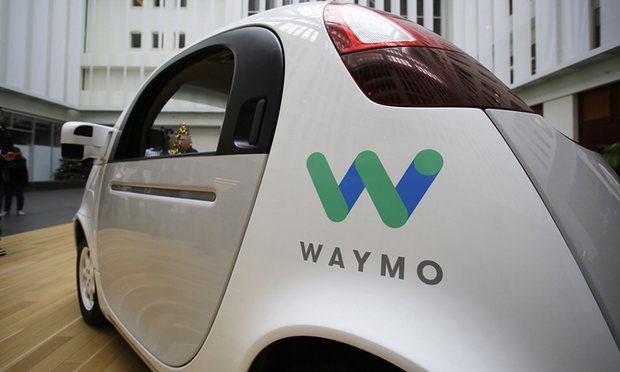 |
| Waymo is charged with turning the self-driving car technology that Google has been developing into a viable business for the future. Photo: Eric Risberg/AP |
That means the small, purpose-built “Koala cars” that Google currently uses for testing its self-driving technology are unlikely to evolve into an actual product that consumers can buy. Instead, the best hope for someone who wants to get their hands on Google’s software looks to be Fiat Chrysler, who signed a deal with Google in May to put its self-driving tech in a small fleet of the company’s Pacifica minivans. If that deal expands into a full-blown partnership, Fiat Chrysler could be the first company selling Google tech to end users.
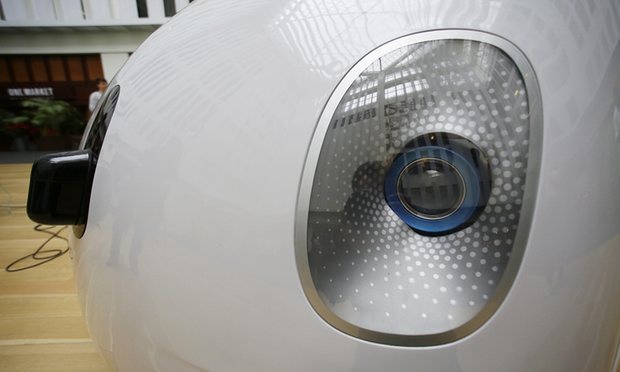 |
| The small, purpose-built ‘Koala cars’ that Google currently uses for testing its self-driving technology are unlikely to evolve into an actual product that consumers can buy. Photo: Eric Risberg/AP |
It is unclear whether Waymo will continue that all-or-nothing goal. Google proudly trumpeted a previously secret milestone it had achieved in the summer of 2015, when a blind man, Steve Mahan, had “driven”, unaccompanied, one of its Koala cars on the public roads of Austin, Texas. That trip was the world’s first fully driverless trip on public roads.
But behind the scenes, reports suggest that Waymo might pull the trigger on the technology earlier than the company intended to when it was simply a research lab. On Monday, industry news site The information reported the groundbreaking partnership with Fiat Chrysler had represented one step towards that intermediary goal, to the concern of some of Google’s self-driving engineers.
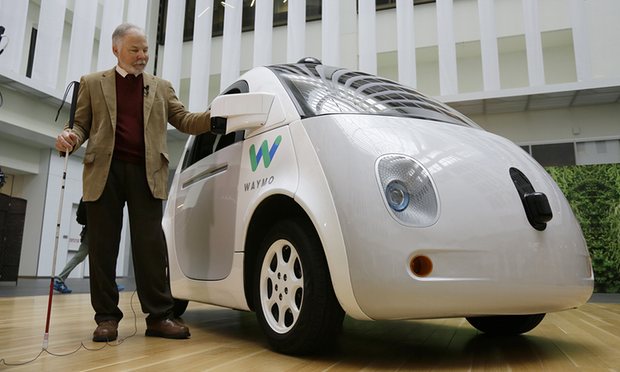 |
| Steve Mahan, who is blind, stands by the Waymo driverless car during a Google event. Photo: Eric Risberg/AP |
Some of those engineers have left the company since the new direction was decided at the start of 2016.
As a fully standalone unit, Waymo will have more power within the wider Alphabet hierarchy to set its priorities and decide its own future. But that power also comes with responsibility: for the first time, Google’s self-driving cars will have a bottom line, and an expectation that, at some point, it will start paying its own way. Simply making the best technology isn’t the only requirement to making money in the car industry – Waymo also needs to make friends.