
Hanoi Convention – Symbol of Global Digital Solidarity and Sovereignty
International delegates attending the Plenary Session emphasized the importance of multilateral cooperation, sovereign equality, and shared responsibility in implementing the United Nations Convention Against Cybercrime (the Hanoi Convention).
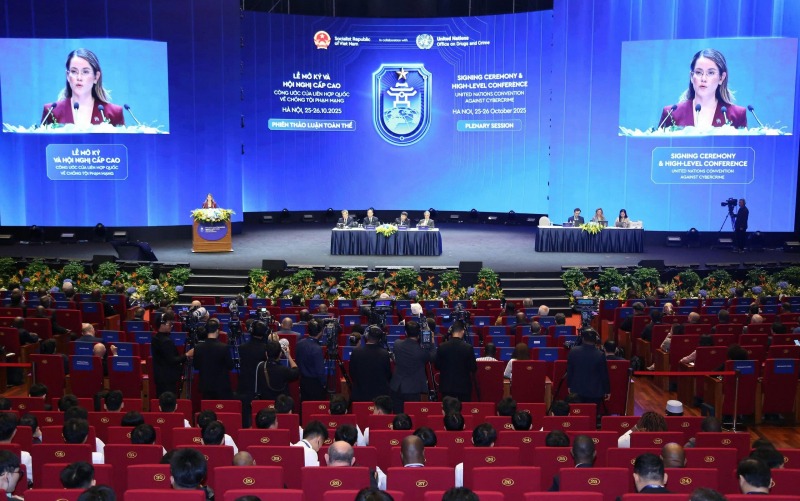
On October 26 in Hanoi, a Plenary Session was held as part of the Signing Ceremony of the Hanoi Convention. The session was co-chaired by Senior Lieutenant General Pham The Tung, Deputy Minister of Public Security, and Deputy Minister of Foreign Affairs Nguyen Minh Vu. A representative from the UNODC also attended the discussion.
Speaking at the Plenary Session, Senior Lieutenant General Pham The Tung stressed that the world had witnessed a historic moment as 69 countries solemnly signed the Hanoi Convention. This act, he said, demonstrates the international community’s aspiration, determination, and desire to enhance cooperation and establish a global legal framework to prevent and combat cybercrime.
In the 19 speeches delivered during the previous session, countries highlighted the Convention’s role as a crucial milestone in creating the first global legal framework for coordinated action against cybercrime. Many nations expressed their readiness to commit to counter-cybercrime measures, strengthen international cooperation in information sharing, and establish common standards for cyberspace governance. They also proposed concrete initiatives, with developed countries pledging resources for capacity-building and technical assistance upon the request of developing nations.
During the morning session on October 26, delegates once again underscored the importance of multilateral cooperation, sovereign equality, and shared responsibility in implementing the Hanoi Convention.
The representative of the Republic of Cuba affirmed that signing the Convention marked “an important step forward in building a multilateral legal framework for governing cyberspace—an area that is both essential and complex.” The statement noted that while the Convention represents a major advance in global cooperation, the world “still faces many challenges such as cyberterrorism, interference with constitutional order, and the misuse of artificial intelligence for criminal purposes.”
Cuba views information technology as a driver of development but warns that its misuse can become a serious threat to peace and national security. The Cuban representative strongly opposed the exploitation of cyberspace for hostile acts, emphasizing: “Genuine global cooperation in cybersecurity cannot coexist with sanctions and blockades.” Havana, he reaffirmed, remains committed to multilateralism, peace, and sustainable development.
The representative of the Republic of South Africa described the adoption of the Convention as a “timely and significant milestone” given the increasing sophistication and spread of cybercrime. “No nation can confront cybercrime alone. International cooperation is at the heart of this Convention,” the delegate stated.
The South African official further affirmed that the Convention is the first global treaty establishing a legal foundation for cooperation, mutual legal assistance, information sharing, and capacity-building among nations. The country also underscored the importance of protecting children from online sexual exploitation and promoting equitable access to technological capacity between developed and developing countries.
“The signing and future ratification of the Convention,” the South African representative said, “will help South Africa harmonize its national legal framework with international norms while opening opportunities for technical assistance and enhanced capacity in investigating and prosecuting cybercrime.” The delegate also reaffirmed the country’s commitment to multilateralism, the rule of law, and human rights.
The representative of the Federal Republic of Nigeria emphasized that the new Convention provides a vital foundation for efforts to prevent cybercrime, protect vulnerable groups, and promote a safer digital environment. The head of the Nigerian delegation noted that the country had reserved its position on certain provisions of the Convention related to sensitive issues such as online sexual exploitation to “ensure compliance with national values and norms, the Child’s Rights Act of 2003, and the Cybercrime Act of 2004.”
“The Convention will help Nigeria better meet the requirements of the digital era and strengthen its capacity to protect its citizens,” the representative added, noting that Nigeria had recently been removed from the Financial Action Task Force (FATF) list—a move demonstrating its strong commitment to combating money laundering and international cybercrime.
Speaking at the Plenary Session, the representative of the Republic of Nicaragua emphasized digital sovereignty and the equal right to development for all nations. “Cybersecurity cannot be separated from the right to development—the right of peoples to access knowledge, science, and technology,” the Nicaraguan representative said, calling on developed countries to increase technology transfer, infrastructure support, and human resource training for developing nations.
Nicaragua affirmed that genuine international cooperation must be based on respect for sovereignty, equality, and non-intervention. “We believe that this Convention can only be effective if it is implemented on the foundation of respect for international law and the right to self-determination of states,” the Nicaraguan delegate emphasized.
The representative of the Republic of the Philippines expressed deep gratitude to the Government of Vietnam and the United Nations for successfully organizing the event and voiced the country’s desire to continue close cooperation during the implementation phase of the Convention.
“Our sincere thanks to all delegations and stakeholders who worked tirelessly to adopt and sign this Convention. We look forward to working together toward its effective implementation.”
The statements from representatives of Cuba, South Africa, Nigeria, the Philippines, and Nicaragua—though from nations of different regions and levels of development—all converged on a common message: the Hanoi Convention is not merely a legal instrument but a symbol of solidarity, respect for sovereignty, and international cooperation for a safe, fair, and humane cyberspace.