
Highlights of the Signing Ceremony of the Hanoi Convention
The Ministry of Public Security (MPS) and the Ministry of Foreign Affairs held an international press conference on the afternoon of October 26 at the National Convention Center (Hanoi), to announce the outcomes of the Signing Ceremony of the United Nations Convention against Cybercrime, also known as the Hanoi Convention.
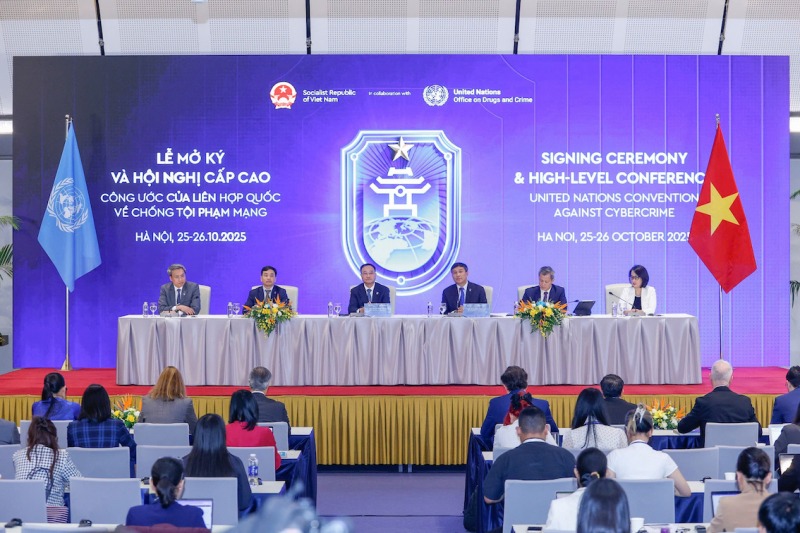
The event was co-chaired by Senior Lieutenant General Pham The Tung, Deputy Minister of Public Security, and Nguyen Minh Vu, Permanent Deputy Minister of Foreign Affairs.
Impressive figures
At the press conference, Deputy Minister Pham The Tung announced that the Signing Ceremony of the Hanoi Convention was a great success. Over the past two days, Hanoi welcomed more than 2,500 delegates from 110 countries as well as 150 international, regional and private organizations, and over 50 research institutions.
In addition, more than 400 journalists from 189 domestic and foreign news agencies covered the signing and related meetings, giving plentiful and detailed information about the happenings in Hanoi during the two days.
In fact, the number of delegates to the signing exceeded the expectation, reflecting the broad and substantive interest of the international community in the event.
The event was broadcast live on the UN’s official media channel in the UN six official languages interpreted by the host country of Vietnam.
Deputy Minister Pham The Tung particularly emphasized that 72 countries signed the Convention during the two-day event. Of the figure, 64 signed right after the Singing Ceremony on October 25.
Signatories include 19 Asian countries, 21 African countries, 19 members of the European Union (EU), and 12 nations from Latin America.
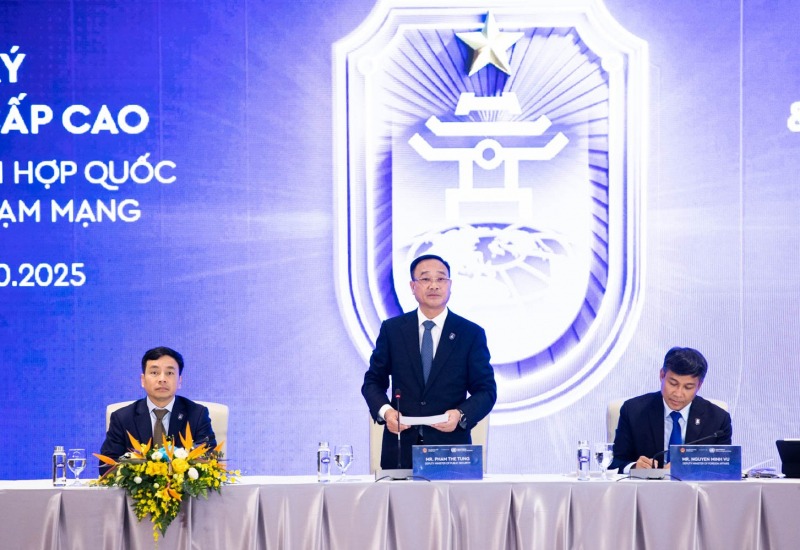
“According to the UN, this has been one of the largest signing ceremonies in the past decade. During the plenary session, 71 remarks were delivered by representatives from countries, international organizations and major technology corporations. giving good ideas and making suggestions on approaches to implement the Hanoi Convention in the coming time. Assitionally, leaders of countries and experts in-depth analyzed various aspects of the convention during more than eight workshops and discussions, as well as 37 sideline events. All the meetings were discussed in a spirit of positivity, goodwill and constructiveness”, said Deputy Minister Pham The Tung.
He also noted that heads of delegations attending the signing ceremony had meetings with Vietnam’s top leaders, including a courtesy meeting with General Secretary To Lam, a state banquet hosted by State President Luong Cuong, and a press briefing with Prime Minister Pham Minh Chinh.
International delegates highly appreciated Vietnam’s views, positions, and determination regarding the Convention in particular, and its broader orientation for innovation and sustainable development goals, including development of digital technologies. The host was also praised by the UN and the international community for its professional organization, standard protocol and hospitability while public order, security and safety work was ensured throughout the event.
“The success of this event has resulted from close and smooth coordination as well as a high sense of initiative of the MPS, the Ministry of Foreign Affairs, the Hanoi municipal authorities, and relevant ministries and sectors. This can be seen as a model of inter-agency cooperation in organizing major international events. On this occasion, I would like to express my sincere thanks to the UN’s specialized agencies, international organizations, and private partners for their excellent coordination and support during the preparation and organization of the event,” Deputy Minister Tung added.
Ensuring absolute safety of participating delegations
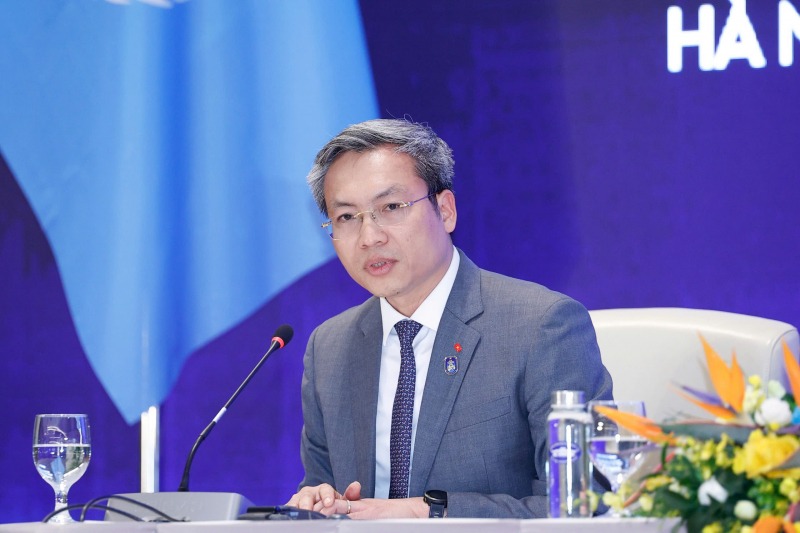
Answering reporters’ questions about the security work, Major General Nguyen Quoc Toan, Chief of the MPS Office, emphasized that this was a significant event — not only for Vietnam but also for the international community. Seven heads of state attended the signing ceremony and related events, plus an exceptionally large number of delegates and delegations participating.
To ensure absolute safety of international delegates and security at meeting places, the MPS established a Subcommittee on Security and Order, directly overseen by a Deputy Minister. The Ministry worked closely with foreign security and intelligence agencies, exchanging information and implementing hundreds of detailed plans to safeguard the event as well as performing protocol and organizational tasks.
Major General Le Xuan Minh, Director of the Department of Cybersecurity and High-Tech Crime Prevention under the MPS, added that comprehensive security plans were developed, from protecting VIP, safeguarding all venues, selecting transportation routes, protecting the airports, ensuring traffic safety, preventing fire, being ready to immediately neutralize any terrorist attempts, responding to issues arising to maintaining cyberspace security.
He stated: “By now, the MPS can affirm that we have fully achieved the goals set by the Ministry’s leadership and the National Steering Committee — ensuring absolute safety and security for the event and the participating delegates. Although security was ensured in a strict and thorough manner but it was still convenient for all delegates and journalists to travel and participate in all events, thereby contributing significantly to its overall success.”
A milestone affirming Vietnam’s leading role
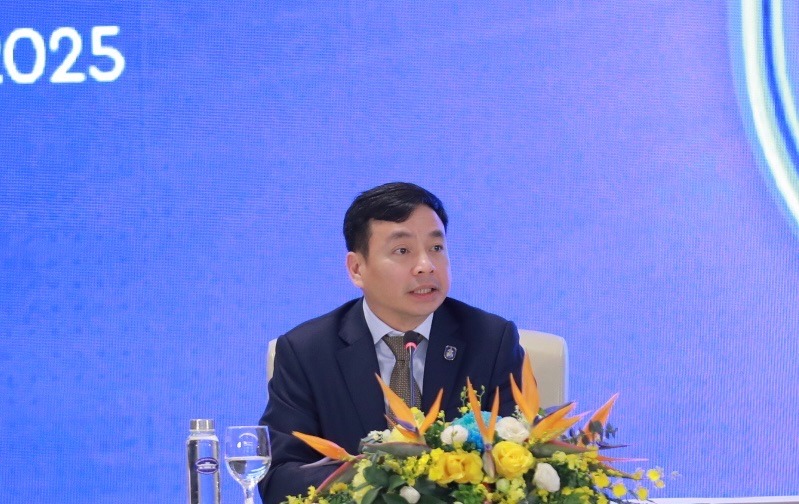
Deputy Minister of Foreign Affairs Nguyen Minh Vu affirmed that the most important outcome of the Signing Ceremony of the Hanoi Convention was that Vietnam together with other member states has created favorable conditions for the convention to come into force early.
Under UN regulations, the convention requires at least 40 signatures to take effect but as many as 72 countries have already signed it, marking a major milestone and creating a premise for the convention to be early implemented, contributing significantly to establishing a stronger global cooperation mechanism against cybercrime. Thus, Hanoi is not only known as the “City for Peace” but now also recognized as a center of international commitments and responsibility for building a safe and trustworthy cyberspace.
Deputy Minister Nguyen Minh Vu emphasized, “That the signing of a UN convention was successfully hosted by Vietnam, a developing country, holds special significance. It reflects the UN’s commitment to supporting developing nations in building their capacity with a view to narrowing the digital gap and strengthening capabilities to combat cybercrime. Meanwhile, Vietnam not only acted as a hospitable and professional host, but also demonstrated a spirit of cooperation, sharing and learning. Through discussions and exchanges, Vietnam and the international community laid the groundwork for future programs in training, resource sharing and experience exchange, fostering stronger cooperation toward a safe, fair, and sustainable cyberspace for all nations.”