
Simple but lyrical life inside Japan Imperial Palace
Emperor cultivates rice, Empress raises silkworms
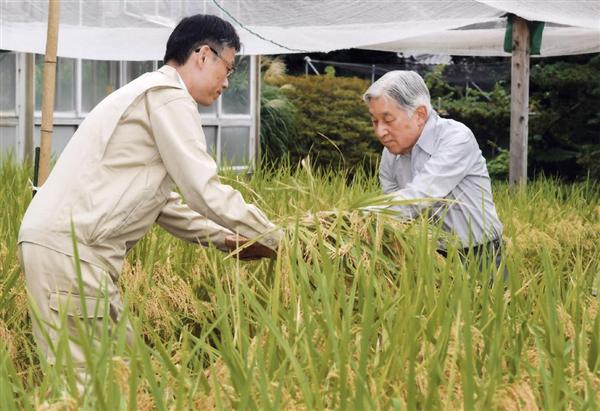
Following his father - Emperor Showa - Emperor Akihito sows seeds of rice and harvests the crop in the rice field inside the Imperial Palace.
 |
| Photo: Their Majesties the Emperor and Empress of Japan |
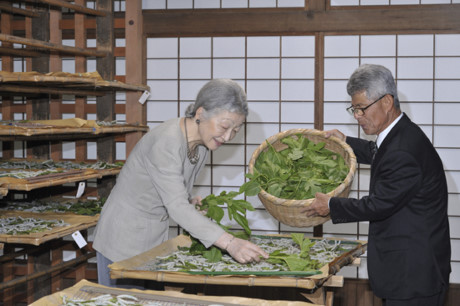
Meanwhile, Empress Michiko continues raising silkworms together with other workers at the Royal Center for Raising Silkworms. She follows Empress Dowager Shoken, spouse of Emperor Meiji, great grandfather of current Emperor Akihito, feeding silkworms with young mulberry leaves.
 |
| Photo: Their Majesties the Emperor and Empress of Japan |
In spring, the Empress starts raising 120,000-130,000 silkworms and after more than 2 months, she collects about 150 kg of cocoons in summer. Part of the silk product will be used to repair old valuable Royal Costumes, which have been preserved since the 8th century at the Shosoin Repository of Royal Treasures in Nara.
Emperor and Empress share love of poetry and art
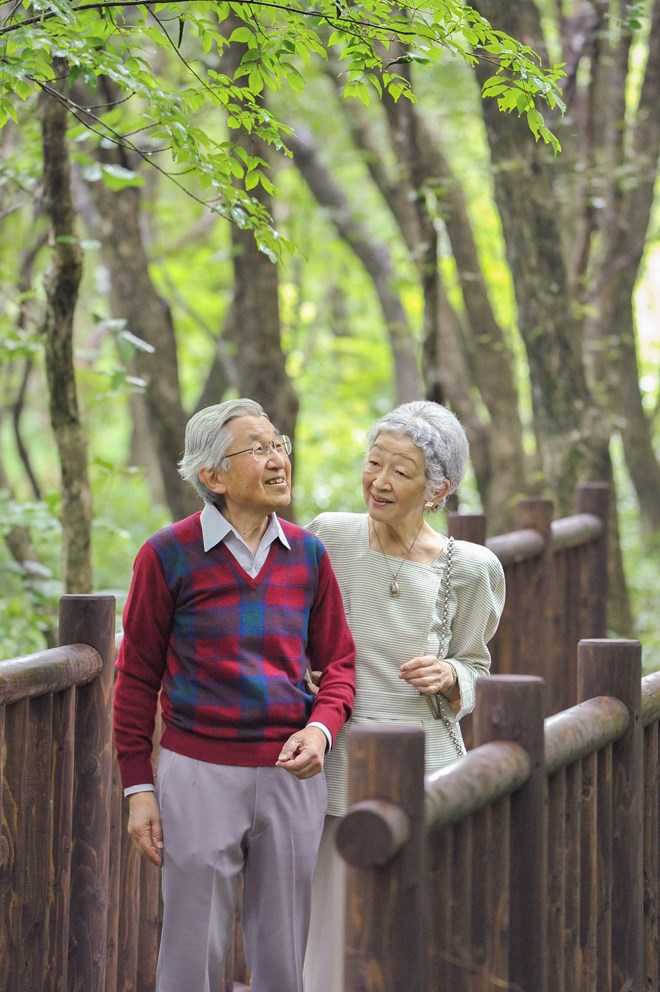
Both the Emperor and Empress are fond of waka, a classical Japanese poem originating from the oldest collection of Japanese poetry called Manyoshu.
 |
| Photo: Pinterest |
In 1986, Empress Michiko, who was a Princess at that time, released her first waka collection called Tomoshibi. In 1997, in response to the earnest request of the people, she released her second collection titled Se-oto.
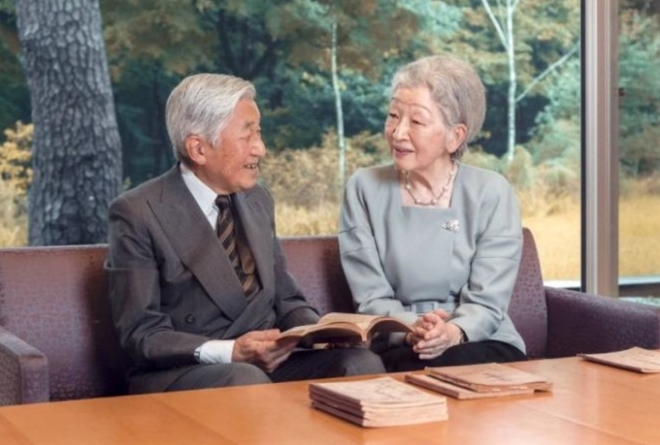
In January every year, the Emperor and Empress hold an Imperial New Year's Poetry Reading festival. 10 best waka poems selected from 20,000 poems written by Japanese poets and people, along with poems composed by the Emperor and Empress as well as other members of the Royal Family will be introduced and read to the audience at the festival.
 |
| Photo: Reuters |
In 1999, to celebrate 10 years since the Emperor coming to the throne, a book titled Michi (road) was compiled and published. The book includes a collection of speeches, interviews and waka poems by the Emperor and Empress.
In 2009, the sequel to this book was published to celebrate the 20th anniversary of the Emperor’s enthronement.
Emperor’s and Empress’s passions for academic fields
Emperor Akihito is very interested in living creatures and nature conservation. Over the years, the Emperor has studied on goby classification.
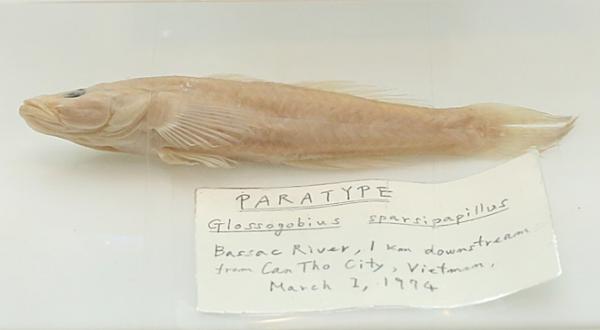 |
| A type of goby that Emperor Akihito found in 1974. Photo: Their Majesties the Emperor and Empress of Japan |
As a member of the Japanese Association of Fishery Studies, Emperor Akihito published 30 articles on the association’s journal between 1963 and 1989, and 2 co-authored articles in 2000. He has also co-authored the book "Japanese fish species and its characteristics through images", with the 3rd edition published in 2013.
Recognizing his achievements, the London Linnean Society in 1980 invited Emperor Akihito to be member. He was officially elected as an honorary member in 1986. In 1988, Emperor Akihito was the first to receive the King Charles II Medal from the London Royal Society, which is awarded to heads of foreign countries for outstanding contributions to scientific development.
 |
| Photo: Their Majesties the Emperor and Empress of Japan |
Meanwhile, Empress Michiko is very keen on art. She has erudite knowledge of Japanese classical literature as well as children's literature. The comic book "My first mountain" composed by the Empress in 1991 is widely admired by Japanese people.
The Empress has contributed greatly to Japanese translation work. She has translated 80 poems by Michio Mado - the first Asian children poet received a Hans Christian Andersen award from the International Board of Books for Young People (IBBY) in 1994.
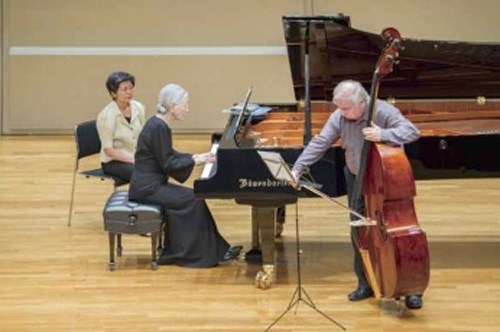
Impress Michiko also loves music. As a pianist, she is a great accompany of the Emperor, a cello player, and Crown Prince Naruhito playing violin. When she has free time, the Impress also plays music in a small chamber with her music companions.
Bringing Royal Family closer to Japanese people
Since taking the throne in 1989, the Emperor have excellently performed his responsibilities, promoting his position as the symbol of the State and national unity. The 20th anniversary of the Emperor’s enthronement was held in 2009 with many activities, and witnessed the participation of the masses from all walks of life.
 |
| Photo: Getty Image |
In May 2007, Emperor Akihito decided to open a section of Fukiage gardens - the place where he and other scientists worked on plant research - to the public for the first time.
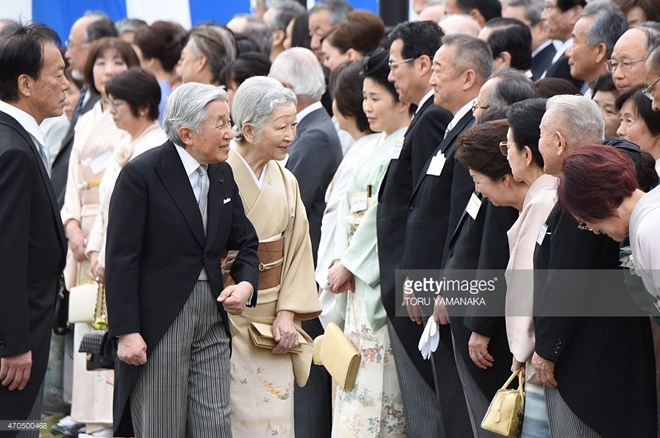
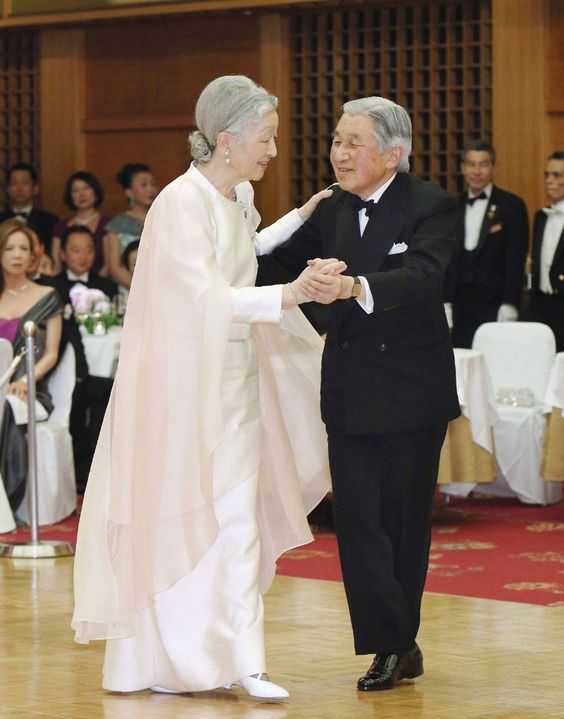
In the palace, the Emperor and Empress host hundreds ceremonies, tea parties and meetings around the year. They have more chances to meet people from all walks of life, including governmental officials, local leaders, business people, farmers, fishermen, social officers and artists.
 |
| Photo: Pinterest |
Impress Michiko once said, she wants to be the one who always cares about what happens in society and cares about the needs of people, as well as to pray for the happiness of all the people.