
Vietnam has potential to reshape Southeast Asia’s economic rankings: Foreign media
Recently, foreign media have shared positive sentiment on Vietnam’s economic prospects, praising the country’s impressive growth as it moves toward becoming a top economy in Southeast Asia.
Recently, foreign media have shared positive sentiment on Vietnam’s economic prospects, praising the country’s impressive growth as it moves toward becoming a top economy in Southeast Asia.
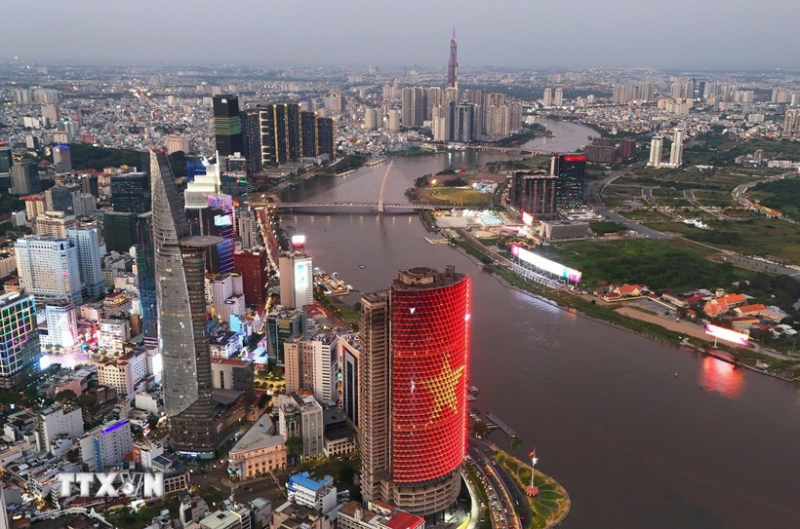
Reuters reported that Vietnam’s economy expanded by 8% in 2025, accelerating from the previous year. The country is a key link in global supply chains for electronics, textiles, footwear and a wide range of other products. Last year’s growth was underpinned by robust domestic consumption and increased government spending on infrastructure, as Vietnam seeks to rebalance its growth model and reduce excessive reliance on exports.
Bloomberg commented that Vietnam has maintained its position as one of the world’s fastest-growing economies, supported by strong lending policies, state backing, a weaker currency, and a boom in the tourism sector.
Meanwhile, AFP noted that Vietnam has long been regarded as a success story among Asian economies. The country’s economy has demonstrated resilience on the back of robust domestic consumption, rising business investment and public spending. Growth in 2025, the agency said, reflects the nation’s solid economic fundamentals and the Government’s continued pro-private sector orientation.
Free Malaysia Today pointed out that Asian economists have paid particular attention to Vietnam’s announcement of 8% economic growth in 2025. Its experience has become a useful benchmark and an important lesson for other countries.
According to the newspaper, the country’s strong performance in 2025 reflects four “interlocking dynamics”. Exports continued to serve as the main pillar of growth, while the country further consolidated its position as a global manufacturing hub. At the same time, rising domestic demand, especially household consumption and investment, provided a significant boost to overall economic momentum. In addition, strategic adaptability in trade and investment policies enabled Vietnam to effectively withstand external shocks, with tariff pressures accelerating diversification into new markets and sectors.
It also assessed that Vietnam’s growth accomplishment was “not a miracle, but the result of methodical economic positioning that transformed vulnerabilities into engines of expansion”.