European Council President António Costa visits Temple of Literature

Thứ Sáu, 30/01/2026, 20:23

PSNews - Within the framework of the two-day official visit to Vietnam, President of the European Council (EC) António Costa on January 29 visited Van Mieu – Quoc Tu Giam (Temple of Literature), a symbol of Vietnam’s tradition of learning and the country’s first university.
European Council President António Costa visits Temple of Literature -0
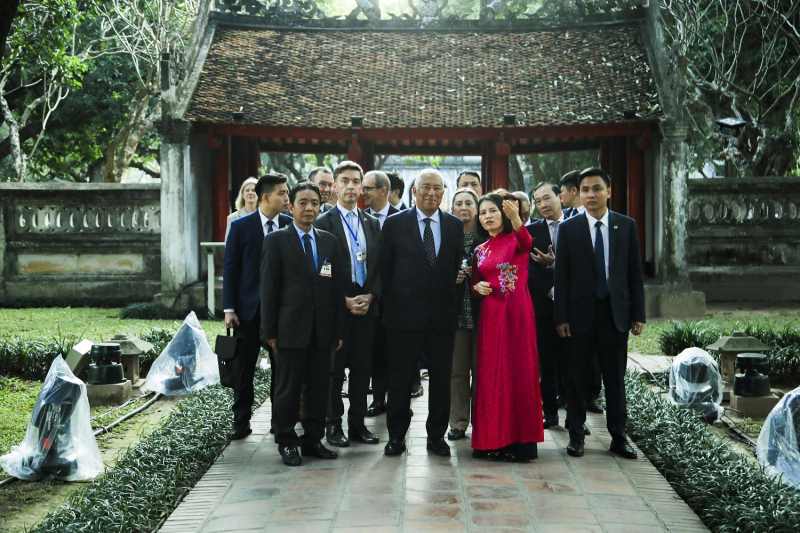
Continuing his official visit to Viet Nam, European Council President António Costa visited the Temple of Literature (Văn Miếu – Quốc Tử Giám) on the afternoon of January 29. He was welcomed by Deputy Minister of Culture, Sports and Tourism Hoang Dao Cuong.
European Council President António Costa visits Temple of Literature -1
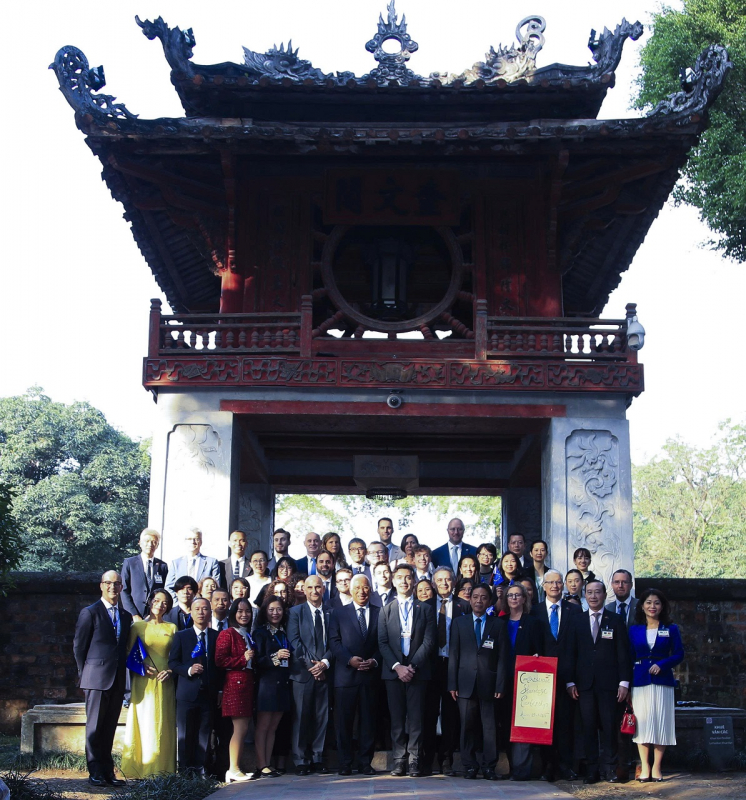
European Council President António Costa and his delegation pose for a commemorative photo in front of Khue Van Cac, a symbol of knowledge, talent, and the long-standing tradition of learning in Thang Long – Hanoi.
European Council President António Costa visits Temple of Literature -2
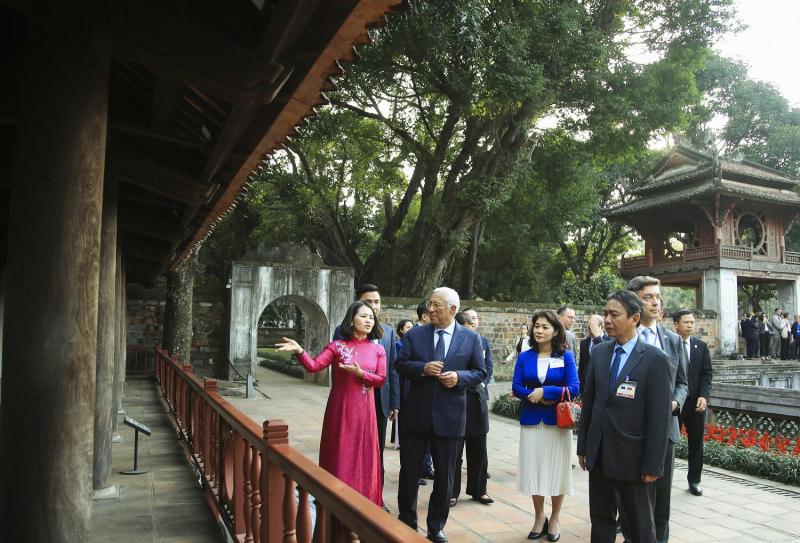
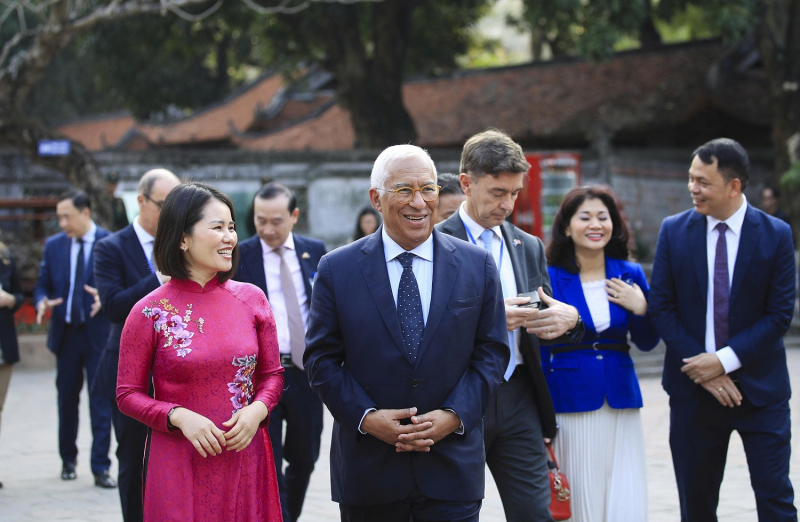
President António Costa and his delegation listen to an introduction about the history and significance of the Temple of Literature complex. The choice of this site reflects respect for and appreciation of Viet Nam’s scholarly traditions.
European Council President António Costa visits Temple of Literature -3
President António Costa expressed his admiration for the atmosphere of the Temple of Literature and the 82 doctoral stelae mounted on stone turtles. In 2010, UNESCO recognized these stelae as part of the Memory of the World documentary heritage.
European Council President António Costa visits Temple of Literature -4
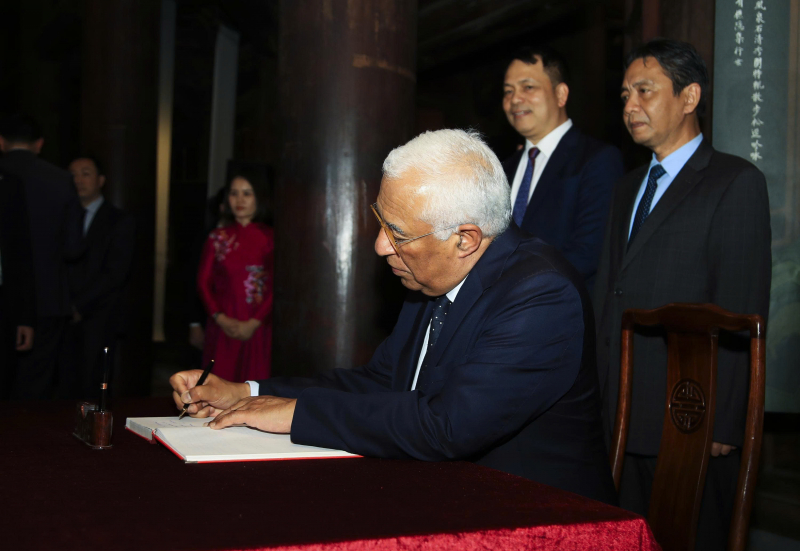
Before leaving the Temple of Literature, President António Costa wrote in the guestbook, emphasizing his appreciation for the site’s historical and cultural values.
European Council President António Costa visits Temple of Literature -5
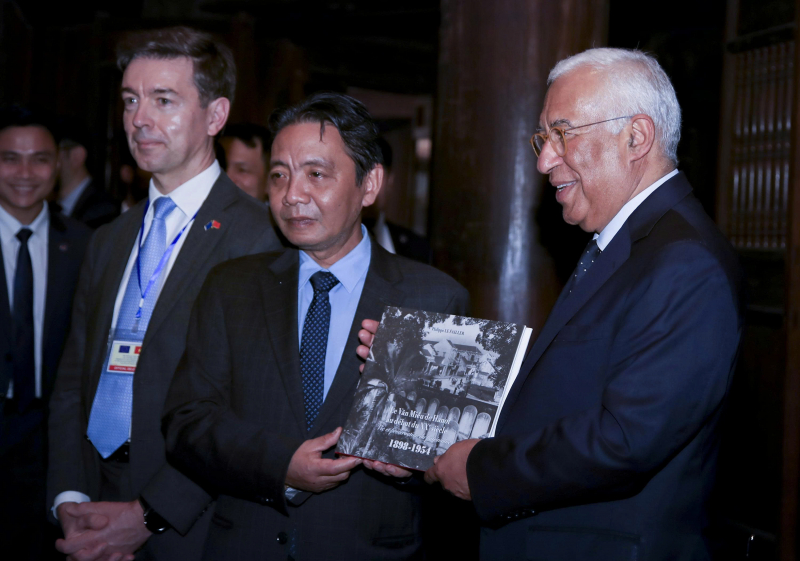
Deputy Minister Hoàng Đạo Cương presented President António Costa with the book “Văn Miếu – Quốc Tử Giám during the French colonial period”, published in French.
By Kim Khanh