
Vietnam Fatherland Front Congress charts reform-oriented agenda for 2026–2031
The 11th National Congress of the Vietnam Fatherland Front (VFF) is taking place in Hanoi from May 11 to 13, gathering more than 1,300 delegates representing social organisations, ethnic groups, religious communities, overseas Vietnamese and various sectors across the country.
Held under the theme “Solidarity – Democracy – Innovation – Creativity – Development,” the congress is widely viewed as a key political milestone that will shape the next phase of development for the VFF amid Vietnam’s ongoing efforts to streamline and modernise the political system.
According to organisers, the congress includes 1,138 official delegates, among them incumbent members of the VFF Central Committee, representatives nominated by localities and member organizations, overseas Vietnamese delegates and full-time front officials.
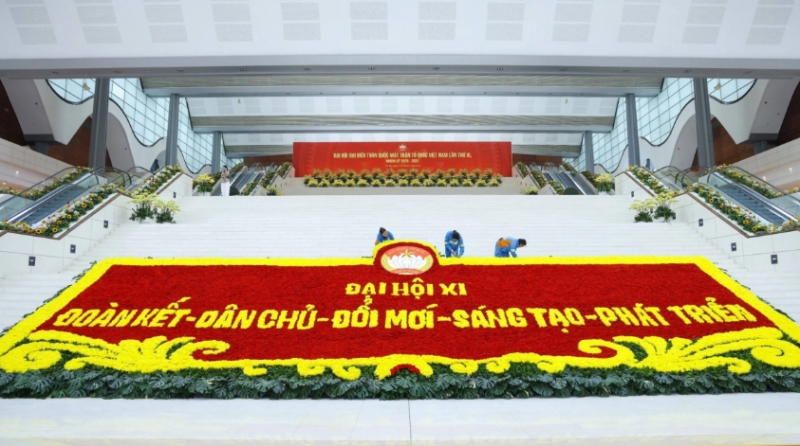
The composition reflects the broad-based nature of Vietnam’s national unity bloc. Women account for 33.5% of delegates, non-party members 46.7%, ethnic minorities 24.3%, religious representatives 19.2%, and business representatives 13.8%. Nearly 79% of delegates hold university or postgraduate degrees.
Among the youngest delegates are 23-year-old representatives from ethnic minority communities in Dien Bien and Quang Ngai provinces, while the oldest delegate is 97-year-old Major General Vo So, head of the Vietnam Truong Son–Ho Chi Minh Trail Traditional Association.
Focus on reform and social consensus
The political report submitted to the congress highlights the goal of strengthening the VFF’s role as the political core in promoting democracy, patriotism and national solidarity while contributing to Vietnam’s long-term development and social stability.
Speaking ahead of the congress, Ha Thi Nga, vice chairwoman and secretary general of the VFF Central Committee, noted preparations have been fully completed, including documentation, personnel arrangements and logistics.
She emphasised that the congress is not merely a routine review of the previous term, but a starting point for a more comprehensive transformation of the VFF system.
The coordinating and unifying role of the Vietnam Fatherland Front must become clearer and stronger in order to help build broader social consensus and further promote national solidarity, she said.
Three strategic breakthroughs
Draft documents for the 2026–2031 term outline several major reforms aimed at modernising the organisation and improving operational efficiency. The proposed agenda focuses on three strategic breakthroughs: reforming mechanisms and operational methods to make the VFF more grassroots-oriented and people-centered; enhancing the effectiveness of social supervision and policy criticism from the early stages of policymaking; building a more professional and capable team of VFF officials to meet new governance demand.
The draft also introduces a new action programme dedicated to science, technology, innovation and digital transformation throughout the VFF system.
This year’s congress also marks the VFF’s strongest push yet toward digitalisation. For the first time, delegates will use a dedicated mobile application called “11th Congress – Vietnam Fatherland Front” to access congress documents, seating arrangements, updates and organizational information in real time.
A digital exhibition space featuring virtual reality models, historical displays and digital governance platforms from VFF branches nationwide has also been introduced as part of the event.
Organisational restructuring under one umbrella
The congress comes as Vietnam continues restructuring political and social organisations under the broader umbrella of the VFF in an effort to improve coordination and administrative efficiency.
Politburo member and VFF President Bui Thi Minh Hoai said the restructuring is not simply about reducing administrative layers, but about building a more effective and cohesive political system.
According to her, bringing mass organisations together under a common framework will strengthen social mobilisation efforts, improve coordination in social welfare and rural development programmes, and expand patriotic and community-based movements nationwide.
Officials also noted that the newly reorganised advisory and coordination system from central to local levels has already begun operating more smoothly, helping improve policy implementation and unified action across the VFF network.