
School curriculum needs to shift from theory to practice: Deputy Minister Le Quoc Hung
The Department of Training and Education under the Ministry of Public Security (MPS) held its conference, on April 14 in Hanoi, to review the implementation of the MPS training and education program in the first-quarter of 2026.
The Department of Training and Education under the Ministry of Public Security (MPS) held its conference, on April 14 in Hanoi, to review the implementation of the MPS training and education program in the first-quarter of 2026.
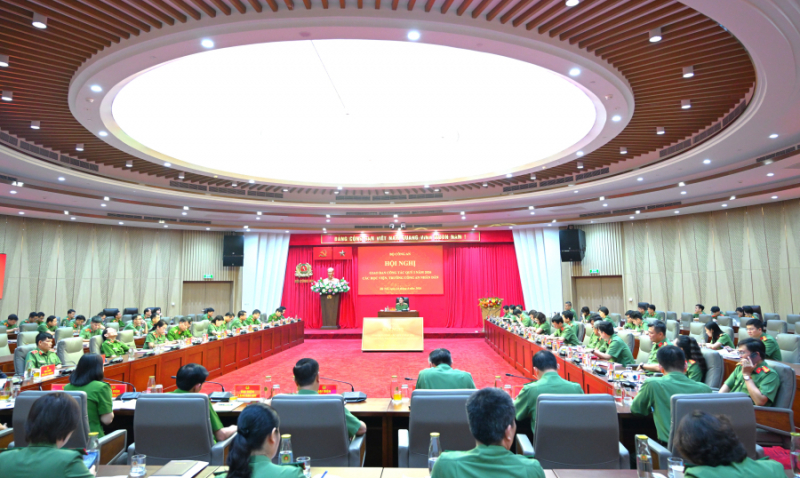
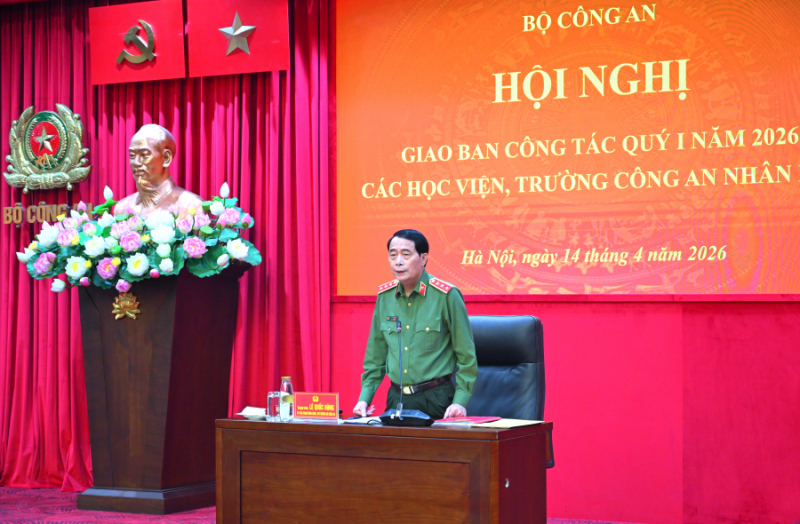
Deputy Minister of Public Security Senior Lieutenant General Dr. Le Quoc Hung attended and delivered a keynote speech at the meeting.
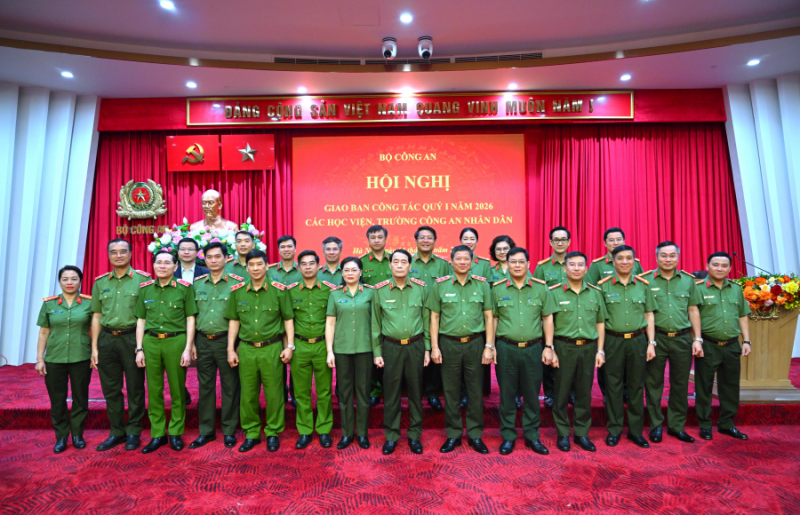
The conference was chaired by Director of the Department of Training and Education Lieutenant General Tran Minh Le Dr., and joined by leaders from public security academies, universities and schools.
The quarterly report highlighted that the department had directed all public security academies, universities and schools to implement the general education and training with big results.
Accordingly, public security academies, universities and schools under the leadership of the department started realizing Resolution No. 71 and Plan No. 15 aiming to create breakthroughs in education and training reform for the 2025–2030 term.
With the concerted effort of the entire public security education and training sector, key milestones achieved in Q1 include:
English as a Second Language: Progressing on a government-led project to gradually establish English as a second language in PPS schools through 2030.
Admissions Modernization: Finalizing the review of Project No. 04 (2022–2025) and launching the 2026 recruitment cycle for regular and second-degree programs.
Standardized Curriculum: Proposing 18 shared training programs and updating specialized majors to better align with the modern security landscape.
To bridge the gap between classroom and field, public security education and training institutions have increased teacher rotations to operational units while inviting high-profile veteran officers as guest lectures to share their hands-on experience and practical case studies with students.
In the time to come, the MPS aims to modernize its recruitment and examination systems. A major priority for the remaining months of 2026 is the digitalization of admission data, including the use of biometric identification and specialized examination software.
In his remarks, Deputy Minister Le Quoc Hung emphasized that reform should bring about quantifiable results other than be a formality.
He urged all public security education and training institutions to reduce academicism in their curriculum and training programs by shifting them from heavy theory toward practical, action-oriented training.
Further, they should develop clear, measurable indicators and roadmaps so that outcomes can be validated by the scientific community and society.
Finally, he suggested adding new majors in high-priority fields such as Medicine, Information Technology and Aviation Security, to the institutions’ education and training programs.
"The conference format itself must innovate—moving toward direct problem-solving, increasing quantitative assessments, and identifying specific 'bottlenecks' to ensure timely solutions," the Deputy Minister stated.
The Deputy Minister also noted that computer-based testing for second-degree programs will be implemented by September 2026, with a pilot for regular university entrance exams slated for 2027.