
Workshop on ICPPED: Affirming Viet Nam’s proactive and responsible approach to human rights protection
PSNews - On January 6, in Quang Ninh Province, Viet Nam’s Ministry of Public Security, in collaboration with the United Nations Development Programme (UNDP), held a workshop on the International Convention for the Protection of All Persons from Enforced Disappearance (ICPPED).
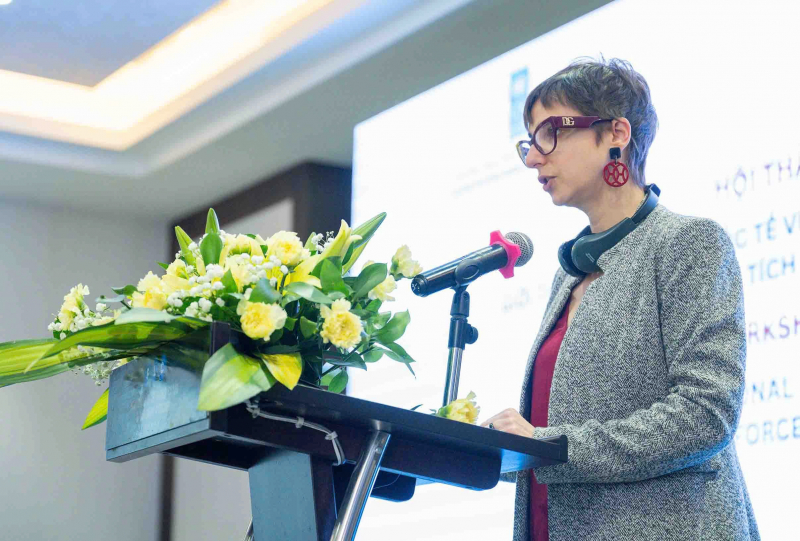
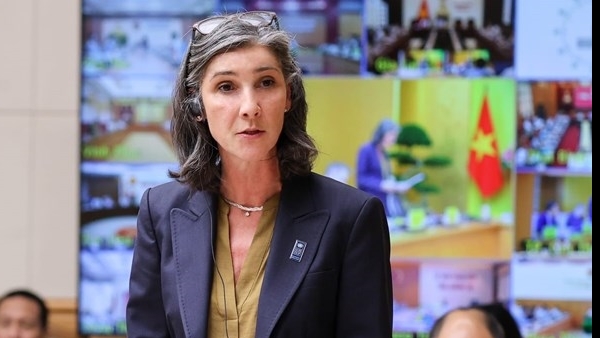
The workshop was attended by Ms. Federica Dispenza, Deputy Resident Representative and Head of the Governance and Participation Unit of UNDP in Viet Nam, along with international experts from the United Nations and several countries that have ratified the ICPPED.
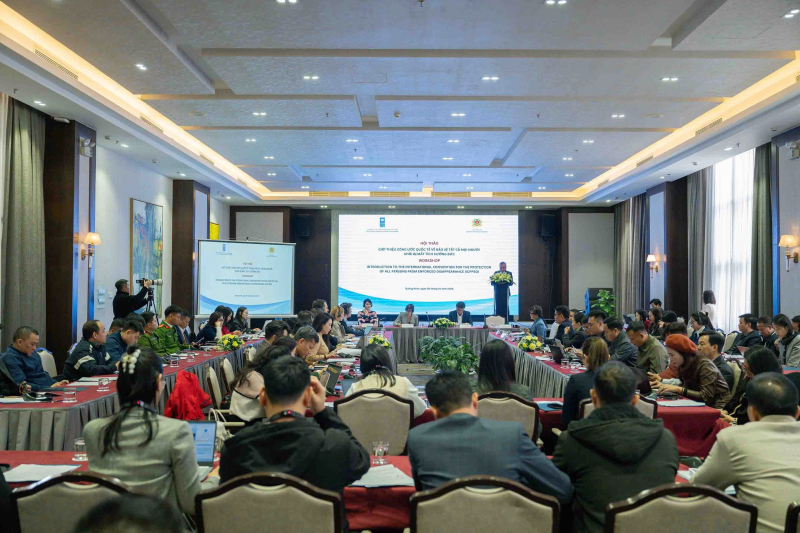
The workshop was attended by representatives from functional units of the Ministry of Public Security, Ministry of National Defense, Ministry of Foreign Affairs, Ministry of Justice, Ministry of Home Affairs, Ministry of Ethnic and Religious Affairs, Ministry of Finance, Supreme People's Court, Supreme People's Procuracy; representatives from the Police, People's Procuracy, People's Court; Military Command of six provinces: Quang Ninh, Lang Son, Son La, Dien Bien, Lai Chau, Tuyen Quang; representatives from the People's Security Academy, People's Police Academy, Institute of Human Rights – Ho Chi Minh National Academy of Politics; Institute of State and Law, Institute of Ethnic and Religious Studies, Institute of Leadership and Public Administration, Hanoi Law University, Faculty of Law, Vietnam National University, Hanoi.
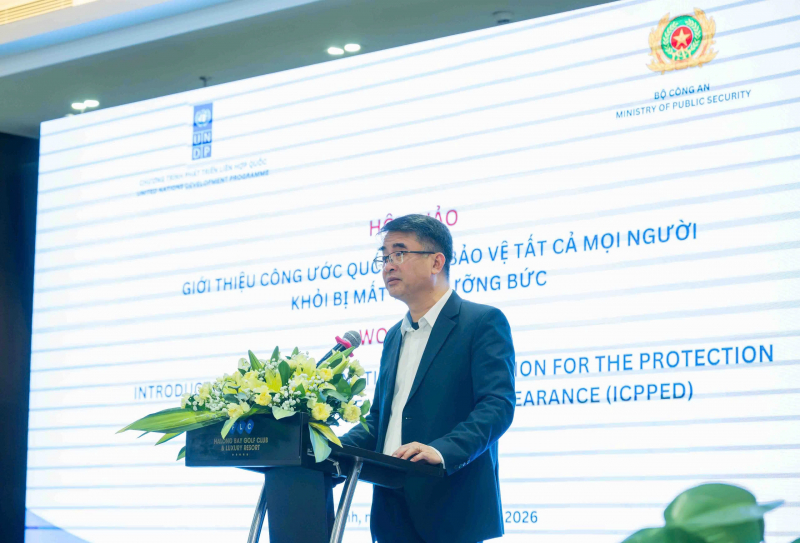
In his opening remarks, Senior Colonel Tran Viet Trung, Deputy Director of the Department of Foreign Relations under the Ministry of Public Security, stated that the workshop aimed to provide a comprehensive introduction to the ICPPED, with support and experience-sharing from international experts. Participants would also exchange professional insights and receive updates on the implementation of the Convention in other countries.
According to Senior Colonel Tran Viet Trung, studying the possibility of accession to the ICPPED is of significant importance in political, diplomatic, legal, and social terms. This process reflects Viet Nam’s goodwill for cooperation, its constructive and open-minded approach, and its efforts to faithfully implement international commitments, including those under the Universal Periodic Review (UPR) mechanism. It also demonstrates Viet Nam’s determination to further promote and better safeguard human rights, thereby contributing to enhancing the country’s prestige and standing in the international arena.
As Viet Nam is currently examining the possibility of joining the ICPPED, the workshop provided an opportunity for Viet Nam and other countries considering accession to discuss and consult international experts. This exchange helped clarify relevant legal and practical issues, improve awareness and understanding of the Convention, and offer deeper insights into opportunities and challenges—particularly the obligations of States Parties as well as the Convention’s procedural and reporting mechanisms.
From UNDP’s perspective, Ms. Federica Dispenza noted that the workshop represented a positive and constructive step in Viet Nam’s ongoing engagement with the international human rights system.
She observed that in recent years, Viet Nam has demonstrated increasing openness to dialogue, cooperation, and shared learning. Having ratified seven out of the nine core international human rights conventions, the Vietnamese Government has accumulated valuable experience in harmonizing domestic legal and policy frameworks with global commitments.
Describing the workshop as “both timely and forward-looking,” Ms. Federica Dispenza said it reflected Viet Nam’s genuine interest in gaining a thorough understanding of the Convention and learning from the diverse approaches adopted by other countries—including achievements, challenges encountered, and opportunities identified throughout their implementation processes.
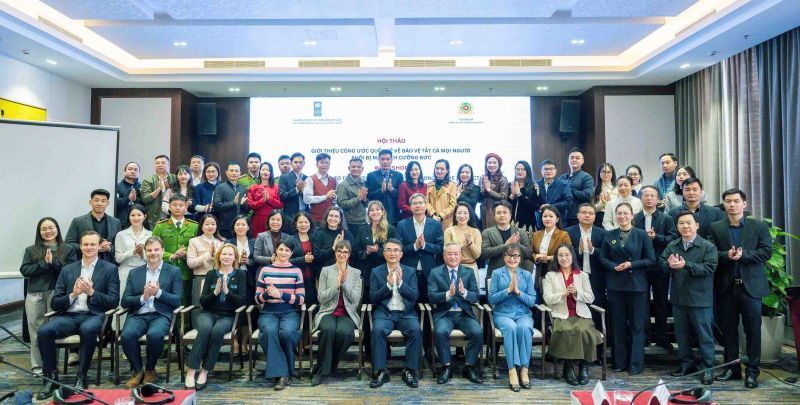
Discussions at the workshop reached a consensus that accession to the Convention should follow an appropriate roadmap, closely linked to legal reform, strengthened institutional capacity, and the assurance of adequate resources for implementation. If Viet Nam were to accede to the ICPPED, it would not only further strengthen the legal framework for human rights protection but also enhance the effectiveness of state governance, promote transparency and accountability, and reinforce public trust in state authorities. At the same time, proactively studying the Convention underscores Viet Nam’s goodwill, constructive engagement, and sense of responsibility toward the international community in fulfilling its commitments.
Notably, the workshop featured a session on international experience, with presentations from countries that have ratified the ICPPED, such as Norway and Switzerland. These contributions shed light on the legal, political, and institutional pathways for accession and implementation, providing Viet Nam with objective and multi-dimensional perspectives while suggesting practical solutions tailored to the country’s specific conditions.
 New UNDP Resident Representative pledges support to Vietnam’s development
  UNDP commends Vietnam for “incremental progress” in promoting women’s leadership